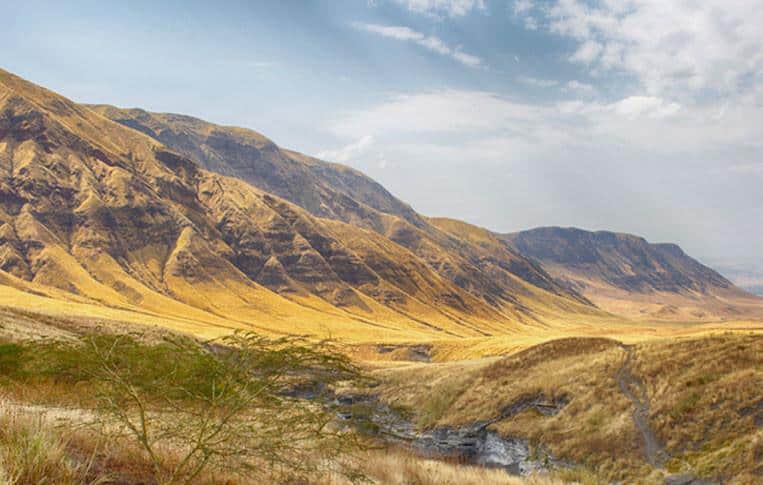
Oldoinyo Lengai is a volcano located in northern Tanzania, near the southern end of Lake Natron. It is an active volcano that has erupted several times in the past, with the most recent eruption occurring in 2021.
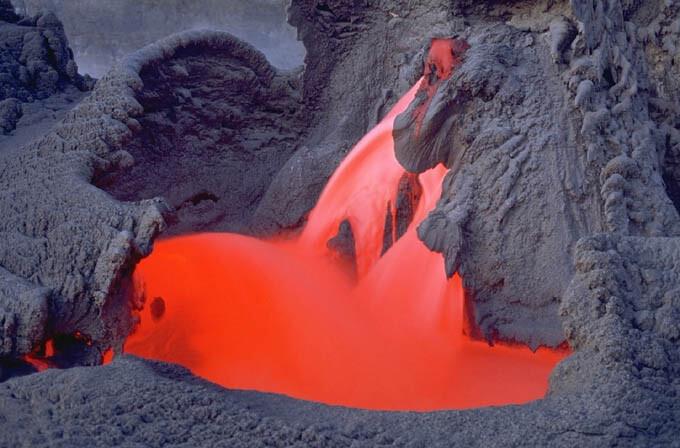
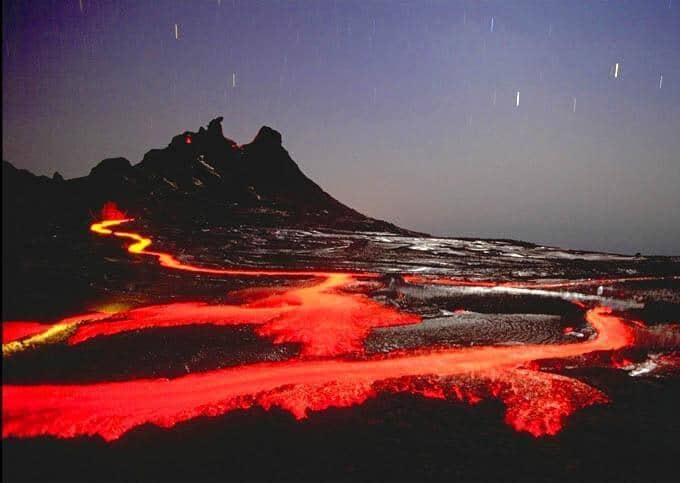
The volcano is known for its unique composition of lava, which is composed of a type of magma called carbonatite. This lava is much cooler and less viscous than the more common silicate lava, and it also contains a high amount of sodium and potassium carbonates. This composition gives the lava a distinctive black color, and it also means that Oldoinyo Lengai is one of the few volcanoes in the world that produces natrocarbonatite lava.
The volcano has a long history of eruptions, with the first recorded eruption occurring in 1883. Since then, there have been numerous eruptions, including one in 2007 that forced the evacuation of local residents. The most recent eruption occurred in November 2021, with reports of ash plumes and lava flows from the volcano.
Despite its frequent eruptions, Oldoinyo Lengai is not considered to be a particularly dangerous volcano, as its remote location means that it does not pose a significant threat to human populations. However, the unique nature of its lava has attracted the interest of volcanologists and geologists from around the world, who study the volcano to better understand the processes that govern volcanic activity.
Kilimanjaro International Airport (Google Maps)
3 Hours Before Flight Time
The climb involves a fairly straight climb to the crater rim, followed by a long descent back to the starting point. It’s a very steep climb and ascent, so isn’t for the fainthearted!
Ol Doinyo Lengai is also quite unusual for being a night-time climb. Only the descent is down in the daylight. As we discuss in a bit, this is done to avoid the worst heat of the day. Setting off at around midnight adds an extra layer of adventure to the whole affair!
Arrival at Kilimanjaro International Airport at Transfer to Arusha and Overnight at Tulia Lodge
We start at 8.00 am from Tulia lodge and go Lake Manyara in comfortable 4×4 cars. The road will take us approximately 3 hours with lunch box
During the way the guide will make a presentation of the trip and will tell a geological/volcanology story of the Rift Valley.
Lake Manyara National park is one of Tanzania’s smaller safari parks, blessed with stunning views from corner to corner. From the eastern side of the park, the Rift Valley escarpment emerges on the horizon with the glittery lake forming a glistening background. On the southern side, you will stumble upon the hot springs of Maji Moto.
The size of the park is 330 square kilometres with upto 220 square kilometres occupied by the Lake when the water levels are high.
Best known for its abundant birdlife the park has more than 400 recorded species of birds.
Wildlife also found in the park include Elephant, Baboon, Blue Monkey, Buffalo, Elephant, Dik Dik and Impala. The pink Flamingos are the highlight of Lake Manyara.
Lake Manyara is a tiny alkaline lake located at a height of 960 meters in the Rift Valley System (3,150 ft). The lake is 10 feet (3 meters) deep when full and takes approximately two-thirds of the park. The lake’s depth and surface size vary substantially
This park offers an option of night game drives. Cultural tours, Bike tours and Forest walks can be done around the National Park.
What to do and what to see in Lake Manyara National Park
-Game drive – explore the varied game and rich birdlife with over 400 species of birds
-Hot Springs Boardwalk way – Enjoy unique views of the steamy Hot Springs, marshland and the Hippo Pool from a freestanding observation platform right in the lake. The boardwalk is a 300 meters long wooden structure located in the southern part of the park.
-Cycling Safari – although not possible within the park boundaries, the direct surroudings of Lake Manyara offer thousands of miles of biking trails to explore
– Nice view of the great East Africa rift valley
Overnight at Migombani campsite
To today you will walk from Mto wa mbu to the top rim of Great East Africa escarpment
Evening students will be gathering firewood and participate on preparade local meal
Overnight at Migombani campsite
Today we cross plains of the Ngorongoro Conservation Area, where we can watch the wild life (such animals as zebra, girafes…) After about 3 hours of drive we reach the Olduvaï Gorge, where Mary and Louis Leakey, famous paelontologists, found archeological records (bones, tools, Laetoli footprints on Sadiman volcano deposits) covering about 4 million years of humanity story. Visit of the site and associated rich museum.
Olduvai Gorge is one of the most important archaeological sites on earth. The geological strata exposed in the gorge reveal a remarkable record of animal and human evolution from about two million until fifteen thousand years ago. Among the significant finds from Olduvai is the range of stone tool types, the thousands of animal fossils – both extinct and extant species – and the fossil bones of hominids (pre-Homo Sapiens) and early Homo sapiens. Mary & Louis Leakey unearthed here a jawbone in 1959, which has pushed back the beginning of human evolution well past the 1.5-million-year mark. The different kinds of hominids found here show a gradual increase in brain size and in the complexity of their stone tools.
Overnight goes to overnight at Serengeti heritage tented camp
Half day in Serengeti kopjes and drive Ngorongoro with Maasai visit
Overnight Rhino lodge
The Ngorongoro Crater in Northern Tanzania, once a gigantic volcano, is the largest intact caldera in the world. Some maintain that before it erupted, it would have been higher than Mt Kilimanjaro, the highest peak in Africa.
Today, long since having collapsed and eroded, it is an extensive highland area with the famous 600 m deep Ngorongoro Crater as its focal point. Nearly three million years old, the ancient caldera shelters one of the most beautiful wildlife havens on earth.
We spend all the day in Ngorongoro crater (20 km large, 260 km2, 600 m high caldera walls). This huge volcanic structure was born a few millions years ago due to cataclysmic eruption. The crater has become now a true sanctuary for wild life: we will observe all the famous African animals and numerous birds…An unforgettable day in Eden!
After that we go to the Ngorongoro Crater, on the top of the rim, where we stay in a comfortable lodge
And Ovenight at Rhino Lodge
In the morning we climb Olmoti stratovolcano. The route takes aprox 1 hour, it is not difficult. At it’s top we observe the 6.5 km large caldera and beautiful landscapes. After that, we cross with 4×4 car the typical Embulbul Engaruka depression with it’s typical masaïs villages towards Empakai volcano and it’s 8km large crater, refilled by an amazing green lake ……
Back to the Ngorongoro Crater on the top of the rim and go to
overnight SerengetiHeritage Manyara Camp site
Today we discover the floor of the Gregory Rift near Lengaï volcano and Natron lake. It takes us about 4 h drive to go to the North and here we can observe the huge rift faulting, amazing Lengai stratovolcano towering Savanna, small hydrovolcanic tuffs cones.
Overnight Maasai Girafe Lodge.
In the morning we hike close to the soda rich Natron lake to discover its hydrothermal springs and famous flamingo population. Prehistorical Homosappiens footprints will be also found close to the lake.
Overnight Maasai Giraffe Lodge
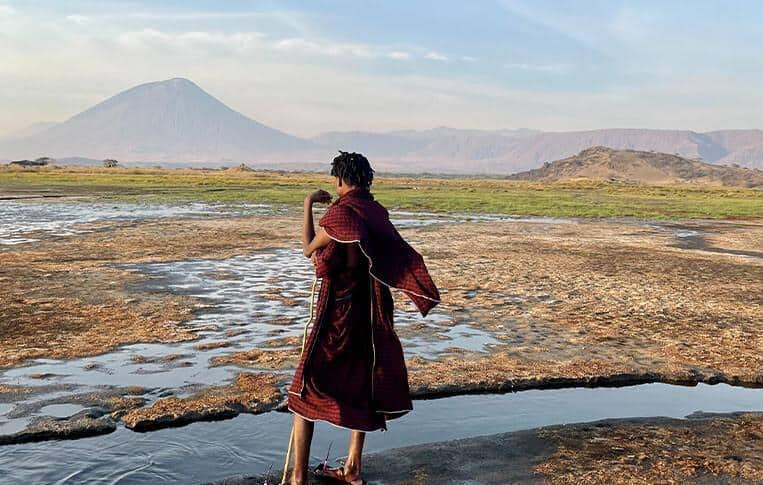
In the morning we walk 1-2 hours to reach the lower slopes of Ol Doinyo Lengaï volcano, which is Masaï people sacred mountain to observe unique natrocarbonatite white lava. Lengaï is the only active volcano in Tanzania, with the last big eruption in 2008, and ongoing activity inside one of it’s two craters.
In the afternoon we walk on Ngare Sero river gorge close to the rift faulting (on volcanic deposits) and swim at a water fall …. A very relaxing moment….
For those who would like to climb Ol Doinyo Lengaï, the trek can be organized on location with Maasai guides. Around midnight the guides will pick you up from the hotel at Lake Natron and take you to the foot of Ol Doinyo Lengai volcano for the start of your climb. The footing on the slopes of the volcano can be treacherous, especially in the dark, so yo should follow your guide without overtaking him. The trek is strenuous and takes between 7 and 12 hours depending on your fitness and resultant pace. The gradient is steep, so it is best to make a short stop with every 100 m or so of altitude gained in order to get acclimatized. After yoг climb to the summit, you will spend some time there and start the descent, which will take aprox 3-4 hours). The car takes you back to the Lodge.
Overnight Maasai Giraffe Lodge.
After breakfast we drive towards Mto Mbu village, it takes 4 hours by car. There we have a very nice and tasty African lunch. Then we drive again and arrive to
In the afternoon we have either free time, and can visit local market place, and visit school and
Overnght Serengeti Heritage Lodge
He hot springs of Kikuletwa, also known as Chemka Hot Springs, are close to the village of Rundugai and are one of the most beautiful places in Tanzania to relax. The small pond is surrounded by palm and fig trees with winding roots. In the morning, Blue Monkeys can often be observed in the trees, whilst the crystal clear, turquoise water invites you to a refreshing bath. Although they are called hot springs, the water in Kikuletwa is not truly ‘hot’ but refreshing, as the water source is fed by Kilimanjaro itself.
Enjoy a wonderful day in just the way you want, in the sun dozing, chatting with the locals at the small bar, or swimming – you determine the course of this day. At noon we will have a picnic lunch, and in the late afternoon we return relaxed to Moshi.
Overnight Park View Hotel
Lake Chala lies on the the South Eastern flank of Mount Kilmanjaro just 55 kilometers from Moshi, near the Holili / Taveta border post to Kenya. Also known as .
A crater lake in a caldera at the border between Tanzania and Kenya and 52 km from Moshi town, Lake Chala was measured at a depth of 95 meters, which makes it deeper than famous Lake Victoria. Filled and drained by underground waters, the lake ranges in color from deep blue to turquoise and green. Take a walk down the 100m deep crater rim to the lake shore and cool your feet at the water’s edge among the rocks as you watch the water ripple peacefully through the lake in shimmering delight.
Overnight Lake Chala Lodge
Maundi crater is a relatively small depression that is located near Mandara huts campsite on mt Kilimanjaro. It was formed as a result of the volcanic activity that was present on the mountain, evident today by the hampered vegetation growth that is present inside it today.
Marangu day hike involves going up to the first camp Mandara hut (2720m) and come back via the same route on the same day. There is a drive about 45km from Moshi town which will take 1 hour. At Marangu gate you have to do some registrations and pay the park entrance fee to get a valid permit to start the hike. Marangu gate is 1879m above sea level and the distance to Mandara hut is 8km (16 km round trip), which will take 3 to 4 hours for each direction.
Raining Forest
On the way to from the Marangu gate to Mandara hut you will cross the rain forest which is a dense forest, pure green with a lot of species of plants. If you are lucky you can see Blue Monkeys and a black and white Colobus Monkeys.
Maundi Crater
It just takes 15 minutes walk from Mandara to Maundi Crater. This place offers a good view of Kibo and Mawenzi peaks and also good view of the Kenyan side ad lake Chala and Jipe. During eruption the pressure was not enough to force magma to get out hence instead of rise up it formed a crater.
And overnight return to Park View Hotel
Transfer to Arusha Airport for your flight to Zanzibar.
Arrive in Pemba and transfer to Chake Chake, the island’s capital. Spend a day exploring the town’s markets, mosques, and historic sites, and learning about the island’s Swahili culture.
Pemba Crater Reseach
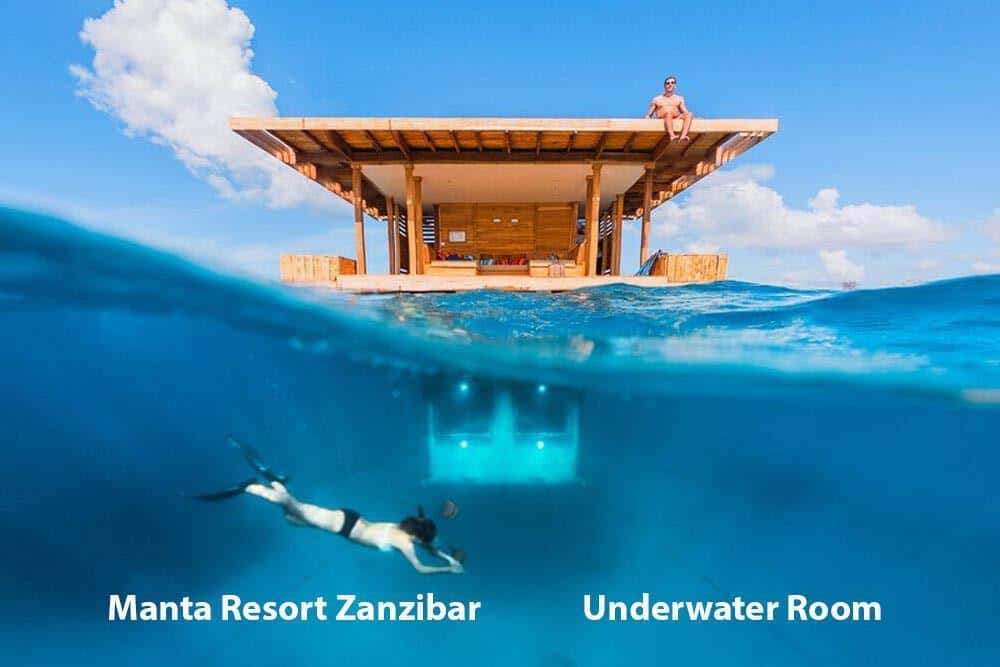
From Chake Chake, transfer to the Manta Resort, a luxury beach resort located on the island’s northwestern coast. Spend one day and one night here relaxing on the beach, swimming, or snorkeling. You can also take a boat trip to explore the nearby coral reefs and see the marine life.
Morning: Start your day with a walking tour of Stone Town, the historic heart of Zanzibar City. Visit the iconic landmarks such as the Old Fort, House of Wonders, and the Sultan’s Palace to learn about the island’s rich history and culture.
Afternoon: After lunch at a local restaurant, explore the colorful markets and shops of Stone Town. Visit the Darajani Market to see local spices, fruits, and vegetables, or explore the narrow alleys of the bazaar to find souvenirs and traditional crafts.
Evening: In the evening, head to Forodhani Gardens, a popular gathering spot for locals and visitors alike. Here you can enjoy the lively atmosphere and sample local street food from the various stalls lining the waterfront.
If you have time, you can also visit one of the local museums, such as the Zanzibar Museum or the Palace Museum, to learn more about the island’s history and culture.
End of Our Tour