Kilimanjaro · 10 days
Kilimanjaro 8 Days Lemosho Route
A scenic western approach across the Shira Plateau, designed so you reach the summit in daylight, with the sunrise.
The climb
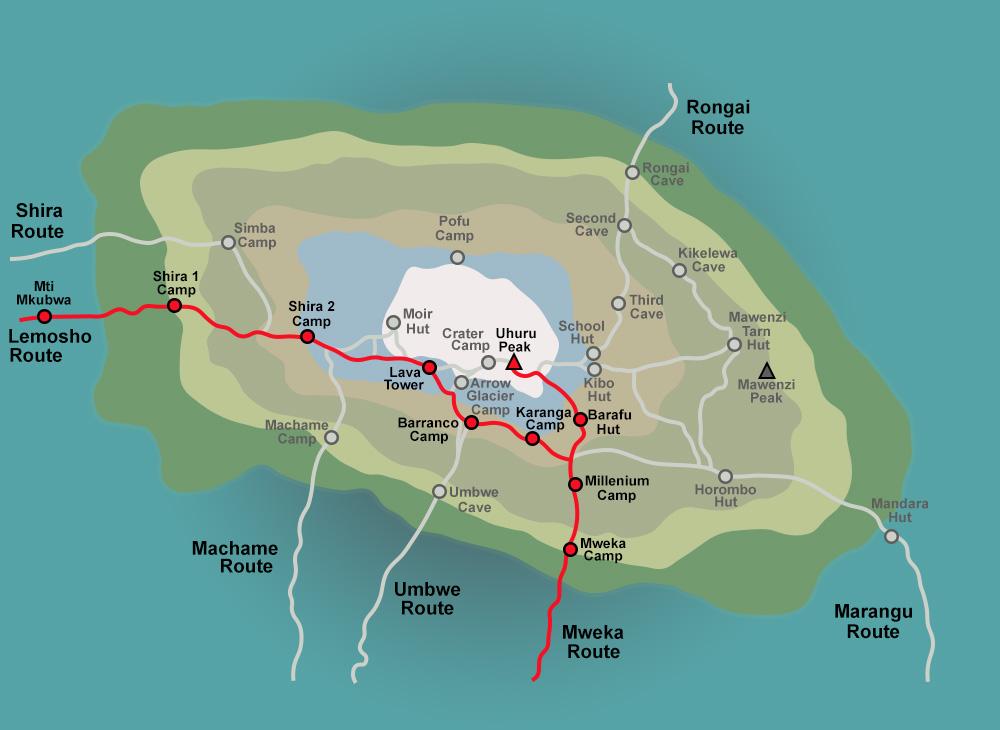
This Lemosho itinerary is designed for those who want to make the summit ascent in daylight, with the sunrise. You pass the Kibo crater rim, climb to the top of the inner Reusch Crater and cross the Shira Plateau, through magnificent scenery with views of the Great Rift Valley, Mt Meru and Longido. Some wildlife can be seen, and it is one of the more scenic routes.
Because the route takes longer, it gives more time to acclimatise – and so it has a higher success rate to the summit.
Day by day
10 days: 8 on the mountain
- 1
Day 1
Arrival in Tanzania and transfer to the hotel
Pick-up at Kilimanjaro International Airport and transfer to Moshi.
Read the full day
Arrive in Tanzania at Kilimanjaro International Airport (JRO). Kilimanjaro Brothers staff will pick you up and transfer you to Moshi town, where you spend the first night at a hotel. If you arrive through Jomo Kenyatta International Airport (JKIA) in Kenya, we will pick you up and bring you to Moshi by shuttle bus.
Overnight Hotel in Moshi Hotel
- 2
Day 2
Londorossi Gate to Mti Mkubwa Camp
Drive to the western gate, register, and walk through the rainforest to the first camp.
Read the full day
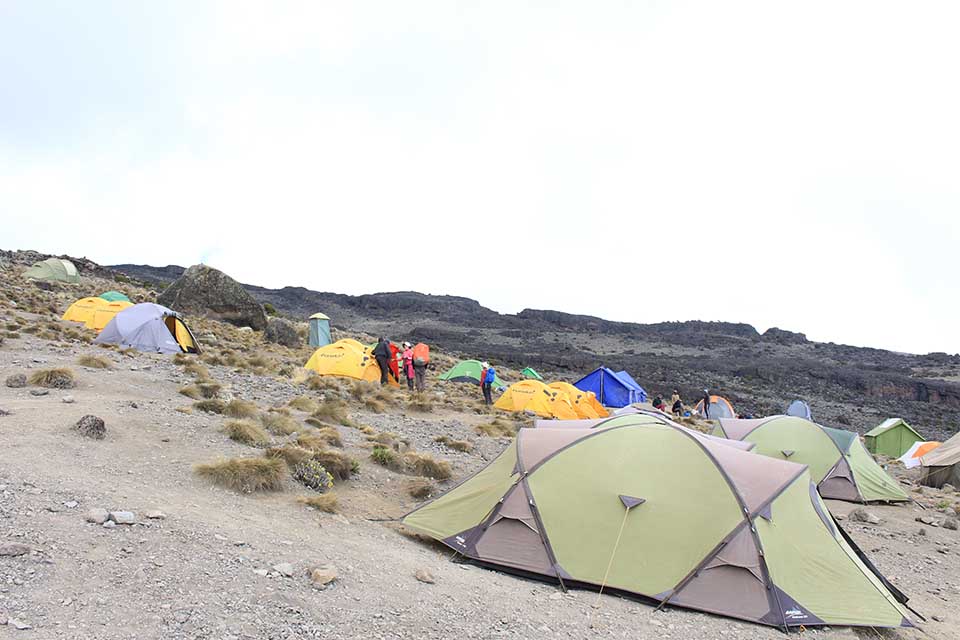
Your guide and mountain crew meet you at the hotel in the morning for another briefing, then you drive (roughly 3u20134 hours) to the park's western entrance, Londorossi Gate (2,200 m). After climbing permits and registration with the search and rescue service, you start trekking to the first camp, Mti Mkubwa Camp (2,780 m). Raincoats are needed today as you walk through the rainforest. When you reach camp, the crew will have put up the tents and cooked lunch.nnThis is your first day at altitude, so from now on:n- Avoid alcohol and caffeinen- Drink over 4 litres of water a day, a little at a timen- Ask your doctor before the trip about Diamox, which many climbers take to ease the symptoms of altitude sicknessnnAt night you may feel the altitude: your breathing slows while you sleep, so your body gets less oxygen and you may have a headache. Listen to your body and tell your guide about any symptoms.
Overnight Mti Mkubwa Camp Camping
- 3
Day 3
Mti Mkubwa Camp to Shira 1 Camp
A gradual climb to your first views of the Shira Plateau and Kibo.
Read the full day
An early wake-up, breakfast, and a gradual climb to 3,500 m, where for the first time you see stunning views of the Shira Plateau and Kibo. The walk to Shira 1 Camp (3,505 m) is fairly easy and takes 5u20136 hours, which lets acclimatisation start gently. At camp the crew cooks lunch and you can rest in your tent or explore nearby.
Overnight Shira 1 Camp Camping
- 4
Day 4
Shira 1 Camp to Shira 2 Camp
An easy walk across the plateau, then an acclimatisation hike towards Lava Tower.
Read the full day
A light trek from Shira 1 Camp to Shira 2 Camp (3,900 m), with spectacular views and the unique flora of Kilimanjaro. Shira 2 is the best place on the trip to see Mount Meru, weather permitting.nnAfter lunch and a two-hour rest, everyone does an acclimatisation hike towards Lava Tower, gaining about 300 metres.
Overnight Shira 2 Camp Camping
- 5
Day 5
Shira 2 Camp to Lava Tower and down to Barranco Camp
Climb high to Lava Tower for lunch, sleep low at Barranco.
Read the full day
After breakfast you leave Shira 2 Camp for the key point of the route, Lava Tower (4,630 m). This section has many ups and downs. You may feel some discomfort, but to acclimatise you need to spend at least 1u20132 hours here, so this is where lunch is. Then you descend to Barranco Camp (3,960 m).
Overnight Barranco Camp Camping
- 6
Day 6
Barranco Camp to Karanga Valley Camp
Up the Barranco Wall early, then on to Karanga.
Read the full day
An early start up the Barranco Wall u2013 leave as early as possible to avoid other groups. The climb is not difficult and takes about an hour; at the top you can rest and take photos in front of Kibo.nnThen comes a harder walk to Karanga Camp with many ups and downs, but our guides set the right pace for the group. A warm lunch waits at camp.
Overnight Karanga Valley Camp Camping
- 7
Day 7
Karanga Valley Camp to Barafu Camp
To Barafu, the summit base, with a short acclimatisation hike and an early night.
Read the full day
After breakfast you walk to Barafu Camp (4,640 m), the starting point for the night climb to Uhuru Peak. Our team sets up camp ahead of you. After a rest you do an acclimatisation hike towards Kosovo Camp (4,800 m) and back, then a hot dinner. Spend the rest of the day resting and sleeping before the summit night.
Overnight Barafu Camp Camping
- 8
Day 8
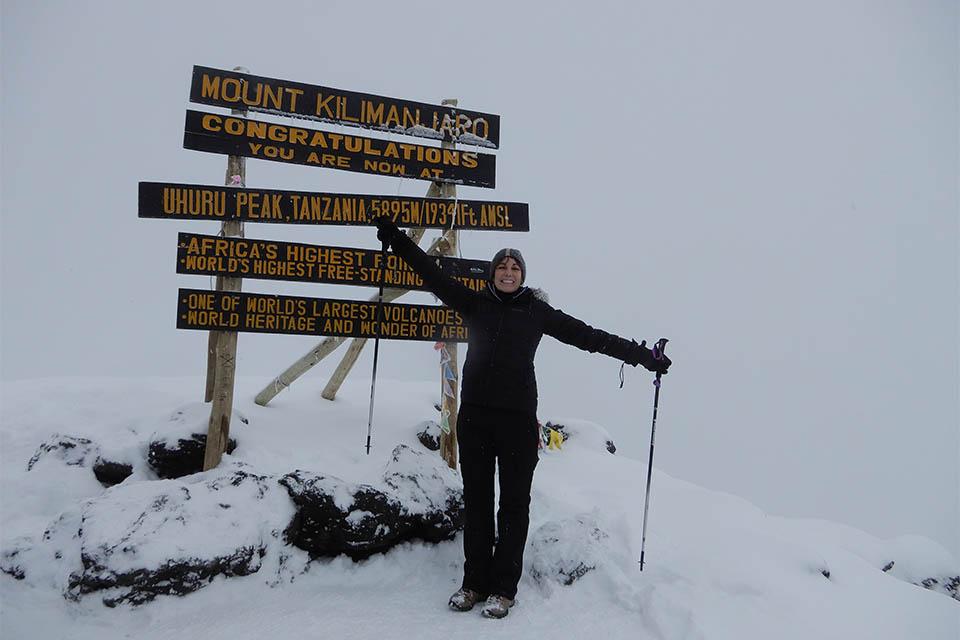
Summit day: Uhuru Peak, down to Millennium Camp
Night start from Barafu, sunrise near the top, Uhuru Peak, then down to Millennium Camp.
Read the full day
You leave Barafu Camp at night to climb to Uhuru Peak (5,895 m). Technically the climb is fairly simple; the challenge is the altitude. Each pair of climbers has a personal guide for the whole ascent, watching your physical and mental condition. After Uhuru Peak u2013 the top of Kilimanjaro u2013 you can walk down to the nearest glacier if you wish. Then you return to Barafu Camp and, after a 2-hour rest, continue down to Millennium Camp (3,820 m).
Overnight Millennium Camp Camping
- 9
Day 9
Millennium Camp to Mweka Gate
Down through the forest to the gate, certificates in our office, and back to the hotel.
Read the full day
After a warm breakfast you head for the park exit, Mweka Gate (1,650 m). The whole crew gathers to congratulate you and you can write about your climb in the guestbook. We present your summit certificates in our office and transfer you back to the hotel.
Overnight Hotel in Moshi Hotel
- 10
Day 10
Transfer to the airport and departure
Rest at the hotel, then the transfer to the airport.
Read the full day
Rest at the hotel and transfer to the airport. End of the climb.
The price
What is included
Included
- VHF handheld radios between guides, camp manager and office
- All government taxes and park entrance fees
- Medical evacuation with AMREF Flying Doctors or Kilimanjaro Search and Rescue
- Medical evacuation with AMREF Flying Doctors
- Pulse oximeter – oxygen level checked for every climber daily
- Pulse oximeter – oxygen level checked for every climber daily
- VHF handheld radios on every trek, for guides, camp manager and office
- Stretcher – a fully rigid steel-framed litter
- Management and safety procedures
- All meals on the mountain – large portions of fresh, healthy, nutritious food
- Clean, purified drinking water
- Warm water for washing every day, and a wash basin for each trekker at camp
- Waterproof tents, mess tent, crew tents, cold-weather sleeping mats, solar LED lights and toilet tents
- Aluminium dining tables and chairs with backs and armrests
- Portable personal flush toilet
- Porter to carry your day pack on the summit attempt
- Arrival and departure transfers
- All transportation in the destination
- 2 nights classic standard hotel accommodation, one before and one after the trek (bed and breakfast)
- Fair and ethical treatment of porters
- Non-alcoholic champagne on the summit
- Warm water and a wash basin for every trekker at camp each day
Not included
- Tips
- Tanzania visa on arrival
- Mountaineering insurance
- Personal gear rentals
- Personal expenses (laundry, telephone, beverages, etc.)
- Optional tours (e.g. a short safari after your climb)
Accommodation
Where you sleep
Moshi
Classic standard hotel
One night before and one after the trek. Comfort hotel on full board with the Deluxe package.
Questions
Before you book
When is the best time to climb Kilimanjaro?
Mount Kilimanjaro can be climbed at any time of year. Most travellers prefer the dry seasons, December to March and June to October. Many consider January, February and September the best months.
Do you offer private and fully customisable climbs?
Yes. Your Kilimanjaro climb is entirely yours to design. You go with the people you choose, leave on whatever day you wish, and decide the route, the pace and the number of days.
Do you offer a Crater Camp option?
Yes. An overnight stop at Crater Camp is an optional extra on any customised climb, usually of eight mountain days or more on the Shira, Lemosho, Umbwe and Machame routes. Fewer than 5% of the 40,000 to 50,000 people who climb Kilimanjaro each year visit it.
How many hours will I trek each day?
On most routes you trek 4–7 hours on most days. On the longest days you can trek as many as 10–15 hours.
Will I see wildlife?
Trekking through the rainforest you are likely to spot black-and-white colobus monkeys, tropical birds and more.
What kind of food will I eat?
Trained chefs prepare three hot, nutritious meals a day, plus trail snacks and afternoon tea. You eat in a solar-lit dining tent with your fellow trekkers and head guide. Vegetarian, vegan, gluten-free and other special meals can be provided if you ask in advance.
What are the camps like?
Your camps are set up and taken down each day by camp porters. You sleep in double-occupancy all-weather tents with full-ground pads. Private toilet tents, solar-lit dining tents with tables and chairs, and basins of hot water for washing are provided in every camp.
How long are the treks?
Treks run from six to eight days, and longer treks can be arranged. We do not book treks shorter than 6 days, as that is too short to acclimatise properly.
Who operates the treks in Tanzania?
We do. We are not agents for anybody; we run the treks ourselves through our own registered Tanzanian company.
Who leads the trek?
A local guide, hand-picked for knowledge of the mountain, safety record, leadership and care for climbers.
What is the maximum group size?
Eight people. Occasionally this may stretch to nine or ten, for example if six are booked and a group of four wants to join; we would ask those already booked first. A single private group can be any size.
Is there a minimum number of people?
We can book a trek for just one person, but it is more expensive. Solo travellers are advised to join a scheduled trek.
Can I climb on dates that are not in your schedule?
Yes. Contact us with your dates and, as long as there are two of you, we will help, at no extra cost compared with joining a scheduled trek.
What currencies do you accept?
Prices are in US dollars. We also accept many other currencies, including pounds sterling, euros, Canadian and Australian dollars, Israeli shekels, Singapore dollars and Indian rupees.
How many days before the climb should I arrive?
We advise at least one full day in Tanzania before the trek. Flying in one day and climbing the next is not the best way to begin.
What are the safety and rescue procedures?
The guides are trained in high-altitude medical care. Every trek carries a comprehensive first-aid kit and oxygen for climbers suffering from altitude sickness – a last resort, as the guides are trained to spot altitude sickness early.
Are park fees included?
Yes. All Tanzania National Parks (TANAPA) fees are included, as are crew entry fees and Tanzania Forest Services Agency (TFS) fees where they apply (Rongai, Shira and Lemosho routes).
How many guides will we have?
2–3 climbers: one lead guide and one assistant guide. 4–6 climbers: one lead guide and 2 assistants. 7–8 climbers: one lead guide and 3 assistants. 9–10 climbers: one lead guide and 4 assistants.
What camping equipment do you use?
High-quality Eureka tents imported from the USA, Canada and Australia, and foam mattresses designed for the mountain (not the thin yoga-mat type).
Do I climb the Barranco Wall on the Lemosho route?
Yes. But don't let it worry you – the Barranco Wall is perfectly manageable, and for many it ends up one of their favourite parts of the trek.
Is the Lemosho route easy or hard?
All routes up Kilimanjaro are hard. That said, Lemosho is fairly manageable and we confidently recommend it to first-time trekkers: it is not too steep, and it does not make you ascend too quickly, which can lead to altitude sickness.
What does the Deluxe package add?
The Deluxe package adds a Gamow bag (a portable hyperbaric altitude chamber) for emergencies, the ALTOX personal oxygen system, and 2 nights in a comfort hotel on full board (bed, breakfast, lunch and dinner) instead of the classic hotel on bed and breakfast.
Kilimanjaro Brothers
Plan this climb with us
Tell us your dates and how many of you are coming. We reply with a price for your group and answer every question before you pay anything.
From $2,600 per person
Or call +255 716 958 597