Kilimanjaro – 7 Days Machame Route Kilimanjaro

0
7 Days Machame Route
From$2,400
Full Name*
Email Address*
Travel Date*
Number of People *
Your Enquiry*
* I agree with Terms of Service and Privacy Statement.
Please agree to all the terms and conditions before proceeding to the next step
Save To Wish List

Adding item to wishlist requires an account

6073


Why Book With Us?

  • No-hassle best price guarantee
  • Customer care available 24/7
  • Hand-picked Tours & Activities
  • Evacuation with AMREF Flying Doctors


Got a Question?

Do not hesitate to give us a call. We are an expert team and we are happy to talk to you.

+255 716 958 597

sales@kilimanjarobrothers.com

Availability : Jan 01’ - Dec 31’
Min Age : 12+

Kilimanjaro – 7 Days Machame Route Kilimanjaro

0
Tour Details

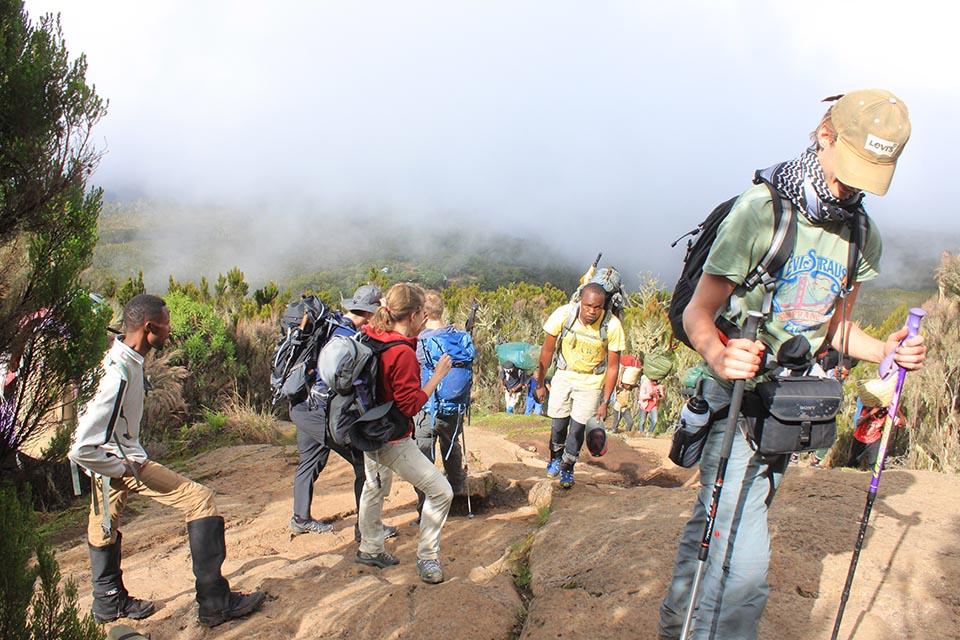
The Machame route is also the most popular route on Kilimanjaro and also known as the “Whiskey” route. Machame’s draw is in its scenic beauty. However, the trail is considered difficult, steep and challenging, particularly due to its shorter itinerary. Therefore this route is better suited for more adventurous hikers or those with some high altitude, hiking or backpacking experience. Descent is made via the Mweka route.

The seven day Machame variation is the ideal schedule for this route. On the 7 day Machame route, the trek from Barranco to Barafu is broken up into two days, allowing for a short day just prior to the summit attempt.

This is important because summit day begins very early, around midnight, so climbers are sleep deprived going into the toughest day on the mountain. By having a short day beforehand, climbers can be better rested. The 7 day Machame route is highly recommended and used by most prominent Kilimanjaro operators.

Departure & Return Location

(JRO) Kilimanjaro International Airport (View Map)

Departure Time

09:30 Hrs

Itinerary

Day 1Arrival in Tanzania and Transfer to the Hotel

Arrive in Tanzania via Kilimanjaro International airport (JRO), Kilimanjaro Brothers staff will pick you up and transfer you to Moshi town where you will spend the first night at a hotel. Those who will arrive through Jomo Kenyatta International Airport (JKIA) in Kenya, we will pick you up and get you transferred by Shuttle bus to Moshi.

Day 2Hiking from Machame Gate (1,800 M) to Machame Camp (3,010 M)

A guide and a mountain support crew will arrive at the hotel in the morning in order to meet you and hold a quick briefing, after which you will travel by vehicle to Kilimanjaro National Park’s entrance: Machame Gate (1,800 m). After the quick formality of acquiring climbing permits and registering with the search and rescue service, the group will start hiking up to Machame Camp (3,010 m). 

This will be your first day at this altitude, so it is strongly recommended you heed the following instructions from this point on:

  1. Abstain from consuming alcohol and caffeine
  2. Drink over 3 liters of bottled water daily (little by little, frequently)
  3. Take a Diamox pill to help alleviate symptoms of altitude sickness. Most mountain climbers take Diamox in the morning, before they start their ascent, in order to reduce discomfort associated with altitude sickness. We recommend you consult your doctor prior to the trip in case of potential allergies.

At night you may experience discomfort associated with acclimatization to the high altitude: because of a reduction in your waking breathing pattern, your body gets less oxygen than during the day. Taking altitude into account, you may therefore start feeling sick and have a headache. Pay attention to your own body and tell your guide if you start feeling any symptoms of altitude sickness.

Change in Elevation: Machame Gate (1,800 M) – Machame Camp (3,010 M)
Hiking Distance: Approximately 5 Km
Hiking Time: 5-6 Hours
Habitat: Rain-forest

Day 3Hiking from Machame Camp (3,010 M) to Shira Camp (3,845 M)

After breakfast you will start hiking up to the second high-altitude camp, Shira Camp (3,845 m). On this day you will emerge from the rain-forest and for the first time be able to see stunning views of the Shira Plateau laid out in front of you. Physically speaking, the trekking is not very difficult, but you may feel the changes in altitude, so pay attention to your body and remember that choosing the proper pace is extremely important for good trekking. When you reach the camp, you will have lunch and some rest, after which the group will go on an acclimatization hike towards Lava Tower Camp with a 300 meter gain in altitude. Back down at Shira Camp you will be served a hot dinner.


Change in Elevation: Machame Camp (3,010 M) – Shira Camp (3,845 M)
Hiking Distance: Approximately 5 Km
Hiking Time: 4-5 Hours
Habitat: Moorland

Day 4Hiking from Shira Camp (3,900 M) to Barranco Camp (3,960 M) through Lava Tower (4,630 M)

Depart Shira Camp after breakfast and head towards Lava Tower ascending from  3,845 to 4,630 m. The rise-and-fall nature of this trek may present some difficulties. However, the 4,600 m altitude at the Lava Tower itself is crucial for proper acclimatization. The lunch break will take place here in order to give you some extra high-altitude time before descending approximately 650 m to Barranco Camp (3,960 m), which is the next overnight stop on this route.

Then you will descend to Barranco Camp (3,960 m). Here you can see the famous Barranco Wall, impressive in both its massive size and steepness! The next day you will be climbing it, but don’t worry: it features a very simple hiking trail.

Change in Elevation: Shira Camp (3,900 M) – Lava Tower (4,630 M) – Barranco Camp (3,960 M)
Hiking Distance: Approximately 11 Km
Hiking Time: 6-8 Hours
Habitat: Grassland

Day 5Hiking from Barranco Camp (3,960 M) to Karanga Valley Camp (4,035 M)

On this day it is best to make an early start to avoid crowding on the way up Barranco Wall. Despite the Wall’s seemingly daunting height and steepness, the actual climb is rather merciful at a mere hour or so. The top provides a great photo opportunity with Kibo Peak as the backdrop.
The next part of the day is rife with ups and downs where your guides will choose the best place for individual climbers.
A lunch break at Karanga Camp shall be followed by an acclimatization climb towards Barafu with its highest point being 4,270 m. The group then drops back to Karanga Camp for the overnight.


Change in Elevation: Barranco Camp (3,960 M) – Karanga Valley Camp (4,035 M)
Hiking Distance: Approximately 5 Km
Hiking Time: 4-5 Hours
Habitat: Alpine Desert

Day 6Hiking from Karanga Valley Camp (4,035 M) to Barafu Camp (4,640 M)

After breakfast, you begin your way to Barafu Summit Camp (4,640 m). Our team will set up a camp for you ahead of time, including tents and sleeping bags, so you can relax. After regaining strength, you have to complete an acclimatization climb towards the intermediate Kosovo Summit Camp with its highest point being 4,800 m and then back to Barafu Camp, where you will be served a hot dinner. It is better to spend the remainder of the day resting and sleeping before night summiting.

Change in Elevation: Karanga Valley Camp (4,035 M) – Barafu Camp (4,640 M)
Hiking Distance: Approximately 6 Km
Hiking Time: 4-5 Hours
Habitat: Alpine Desert


Day 7Ascend to Uhuru Peak (5,895 M) and Descend to Millennium Camp (3,820 M) from Barafu Camp (4,640 M)

Summiting starts around midnight from 4,635 m, ending on Uhuru Peak at 5,895 m. While the trek itself is fairly simple, rarified mountain air does pose a challenge. Therefore, a guide who will monitor their condition throughout the climb shall accompany every two climbers ensuring safety above all. Upon summiting, you shall have an opportunity to walk on the nearby glacier.
The descent to 3,820 m at Millennium Camp starts after a two-hour rest back at Barafu Camp.

Change in Elevation: Barafu Camp (4,640 M) – Uhuru Peak (5,895 M) – Millennium Camp (3,820 M)
Hiking Distance: Approximately 15 Km
Hiking Time: 8-12 Hours
Habitat: Arctic

Day 8Descend from Millennium Camp (3,820 M) to Mweka Gate (1,650 M)

This last camp’s position being far lower at the forest line will afford you a good night’s sleep further enhanced by thoughts of having reached the top. Breakfast will be followed by the return to 1,650 m at the final point in this adventure- Mweka Gate. After a short celebration with the whole of the climb crew and arrival at our offices, you will receive your climb certificates, followed by the drive to your hotel.

Change in Elevation: Millennium Camp (3,820 M) – Mweka Gate (1,650 M)
Hiking Distance: Approximately 12 Km
Hiking Time: 4-5 Hours
Habitat: Rain-forest

Day 9 Transfer to Airport and Departure

Rest in the hotel and transfer to the airport.
The total distance covered is 70 Km or 42 miles.

End of the climb.

Price Includes

Price Excludes

  • Tips
  • Tanzania Visa on arrival
  • Any Private Expenses
  • Mountaineering insurance
  • Personal gear rentals
  • Personal Expenses (e.g. laundry, telephone, beverages, etc.)
  • Optional Tours (short safari after your climb etc.)
FAQs

When is the best time to climb Kilimanjaro?

Mount Kilimanjaro can be climbed anytime throughout the year. Most travelers prefer climbing during the dry seasons: December to March, June to October. Many consider the best months to climb Kilimanjaro to be January, February, and September.

Do You Offer Private and Fully Customizable Climbs For Kilimanjaro

Your Kilimanjaro dream climb is entirely your own to design. We will work with you to customize exactly the triumphant Tanzanian mountainous quest experience you want. You go with the people you choose. You leave on whatever day you wish. You decide on your preferred route option, pace, and the number of days you will take.

Do You Offer Crater Camp Option On Kilimanjaro Climbs

An overnight stop at Crater Camp is an optional extra on any customized Kilimanjaro climb , usually lasting eight actual mountain days or more on the Shira, Lemosho, Umbwe and Machame routes. Possibly the most bizarre place you will ever see, it is visited by less than 5% of the 40,000 to 50,000 people who annually ascent Kilimanjaro on a distinct highlands voyage in northern Tanzania

How many hours will I trek each day?

On most routes, you’ll trek 4-7 hours most days. On certain routes you’ll trek as many as 10-15 hours on the longest days.

Will I see wildlife?

Prior to the climb, you’ll enjoy an acclimatization day with wildlife viewing and nature walks. Trekking through the rain forest, you’re likely to spot black-and-white Colobus monkeys, tropical birds and more.

What kind of food will I eat?

Highly-trained chefs prepare three hot nutritious meals daily, as well as trail snacks and afternoon tea each day.

You’ll eat all your meals in a solar-lit dining tent with your fellow trekkers and head guide.

Delicious vegetarian, vegan, gluten-free and other specialty meals can be provided (with advance request). We’re happy to send you a sample menu—just ask!

What are the Kilimanjaro accommodations like?

Your mountain camps are set up and broken down each day by expert camp porters. You’ll stay in double occupancy all-weather tents with full-ground pads to keep you and your gear dry. Private toilet tents, solar-lit dining tents with tables and chairs, and basins of hot water for washing are provided in every camp.

Grand Traverse treks include upgraded solar-lit walk-in-height sleeping tents with mountaineering beds and mattresses for additional comfort.

How long are the treks?

The treks vary from six to eight days. The exact length of each trek is written on the Trekking dates and prices page. You can, of course, ask for treks that are longer than eight days and we can arrange this for you – though we don’t book treks for less than 6 days as we feel this is too short to allow you to acclimatize properly.

Who are your operators in Tanzania?

We are. We are not agents for anybody, but run the treks ourselves through our own registered Tanzanian local company.

Who is leading the trek?

The treks will be led by a local guide whom we have hand-picked because of their knowledge, expertise and experience on the mountain. We have an advantage here: because of the many years we have been working on the mountain and the number of times we have climbed it, so we are able to employ only those guides who meet our very stringent criteria. We employ only those who demonstrate excellent knowledge of the mountain, first-rate safety records, brilliant leadership skills and routinely provide wonderful care and attention towards all climbers to ensue their trek is a safe and enjoyable one.

What is the maximum number of people on the trek?

The maximum number of people on the trek is eight. Occasionally this may stretch to nine or ten if, for example, there are already 6 people booked on the trek and a group of four want to join. On the rare occasion where this happens we will contact those already booked on the trek to see if they have any objection to the group size to grow above eight.

Can I get an itinerary for the trek?

You will receive an exact itinerary when you send us an inquiry. In the meantime, you can read a summary of each of the treks by visiting our Routes up Kilimanjaro section. You can also find detailed day-by-day descriptions and detailed day-by-day route maps of each of the trails in the guidebook – which you will receive for free when you book a trek through us.

I would like to book my trek, but if my group is larger than ten - is this a problem?

We aim to keep the size of the public groups to a minimum. That said, if you are a single, private group, then there is no problem accommodating you whatever the size of the group, as of course, you will be aware before arriving in Tanzania of the number of people you will be trekking with.

Is there a minimum number of people on the trek?

We can book a trek for just one person but, as stated above, this will be quite expensive. If you are a solo traveler, therefore, we strongly advise you to join one of the scheduled treks.

What is included in the price - and what isn't?

I'd like to climb my climb through you but not on the dates you are offering in the schedule - is it possible to book on another date?

Yes. If you wish to book a climb with us on a date that is not listed on the trekking dates and prices page, just contact us and, as long as there are two of you, we will be able to help you. Nor will it cost any more than if you booked to join a prearranged trek. Much will depend on the demand but we will try, where possible, to accommodate you where we can.

What currencies do you accept as payment?

As we are charged in US dollars, so all our prices are quoted in US dollars too. However, we are able to accept a wide range of other currencies too including sterling, euros, Canadian dollars, Australian dollars, Israeli shekels, Singapore dollars, Indian rupees etc etc

How many days before the start of the climb should I arrive in Tanzania?

We advise you to spend at least one full day in Tanzania before beginning your trek. Arriving by plane one day and then climbing the next is not the best way to begin a trek.

What are the safety/rescue procedures on Kilimanjaro?

The guides have been trained in high-altitude medical care. Each trek will also be equipped with a comprehensive first-aid medical kit. The guides also carry oxygen for those people who are suffering from altitude sickness – though this is very much a last resort and the guides are trained to spot altitude sickness before it becomes necessary to use oxygen.

Are park fees included in your price?

Yes, all Tanzania National Park (TANAPA) fees are included in our Kilimanjaro price. Currently, the conservation fees at Kilimanjaro National Park are: US$70 per person per day and US$50 per person per night for camping. Crew entry fees and Tanzanian Forest Services Agency (TFS) fees (applicable for Rongai, Shira and Lemosho routes) are also included in our Kilimanjaro price.

Can children climb Kilimanjaro?

The minimum age limit set by Kilimanjaro National Park for children trekking to Uhuru Peak on Mount Kilimanjaro is 10 years old.

How many guides will we have?

You will have one lead guide and an assistant guide for 2-3 climbers.
For 4-6 climbers, you will have one lead guide and 2 assistant guides.
For 7-8 climbers, you will have one lead guide and 3 assistant guides.
For 9-10 climbers, you will have one lead guide and 4 assistant guides.

How is the quality of the camping equipment that you use?

We use high quality Eureka tents imported from the USA, Canada and Australia. We also provide foam mattresses designed for mountain excursions (not the thin yoga mat type).

Do I climb the Barranco Wall on the Machame route?

Yes, the Machame route leads you up the magnificent Barranco Wall. This is a highlight of the trek for many.

Map

Photos
3 travellers are considering this tour right now!
From$2,400
Book Now

Proceed Booking